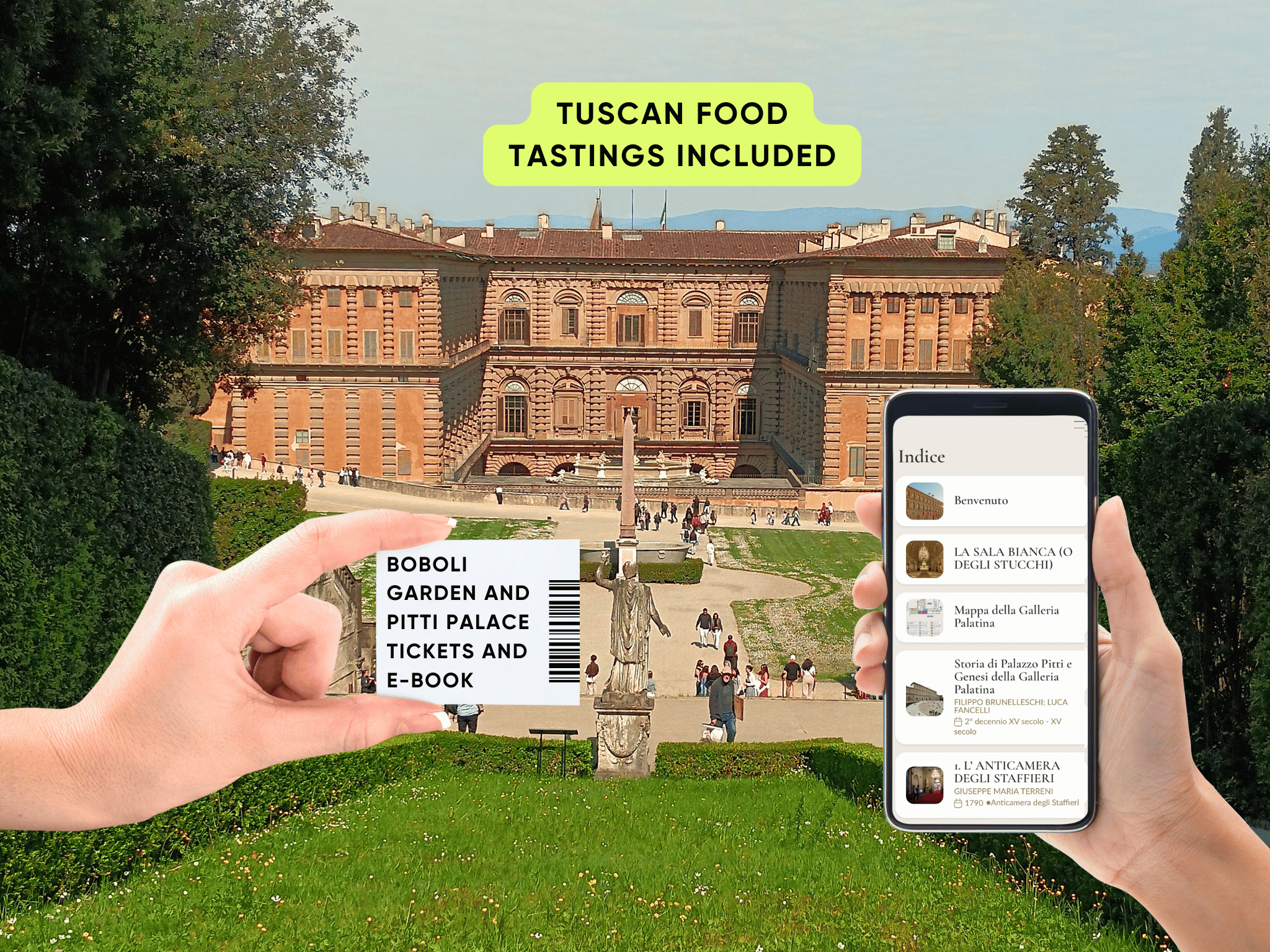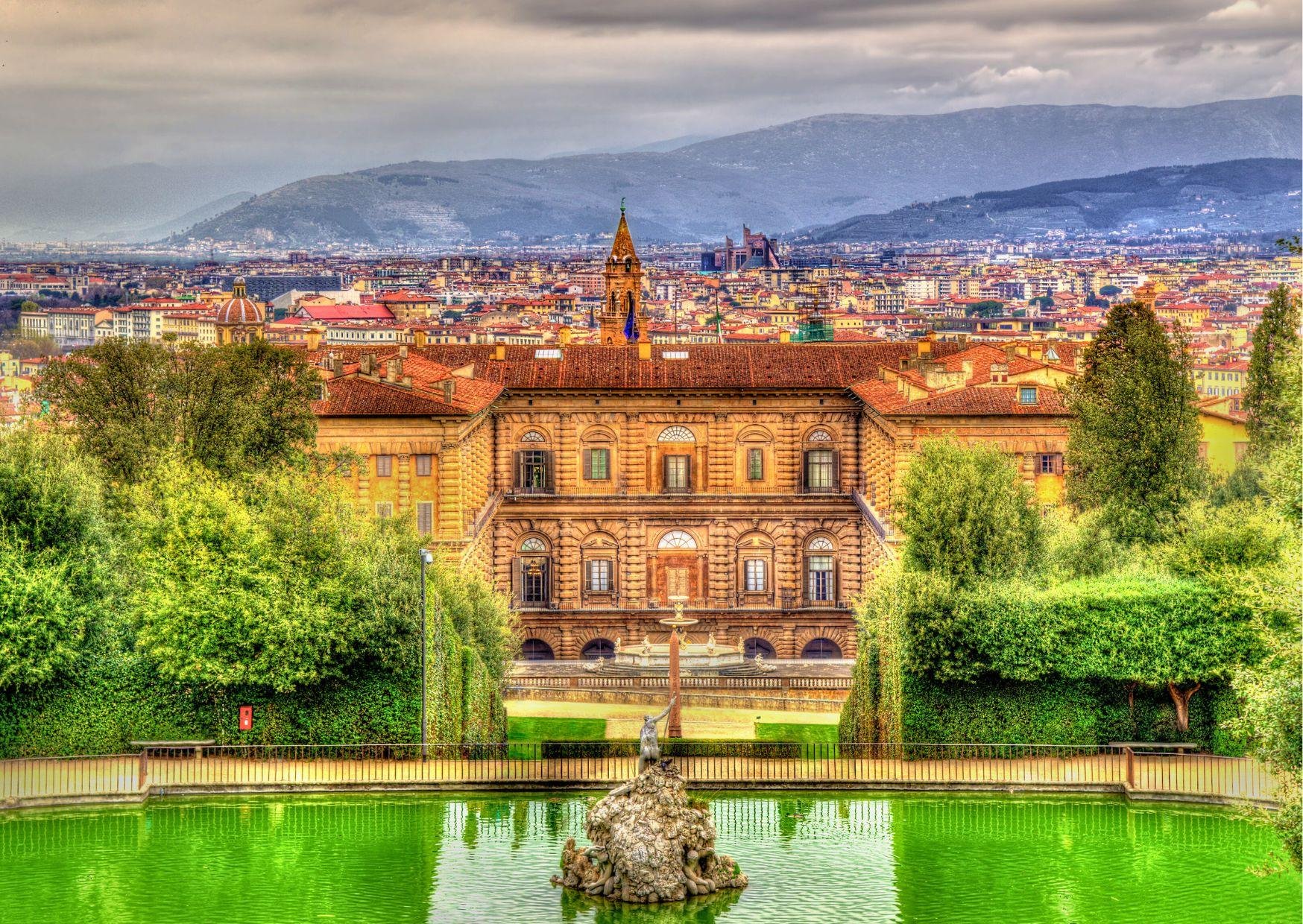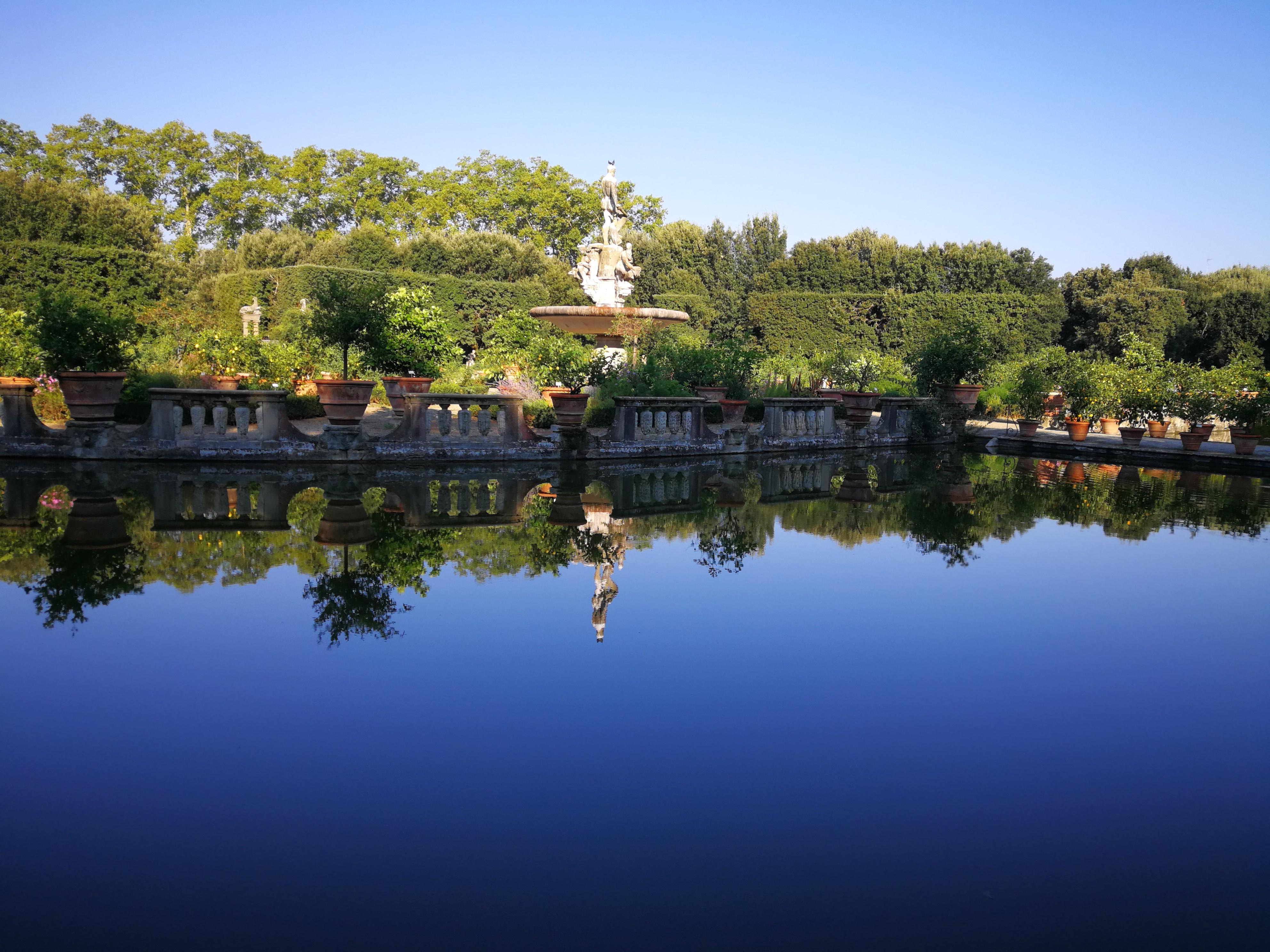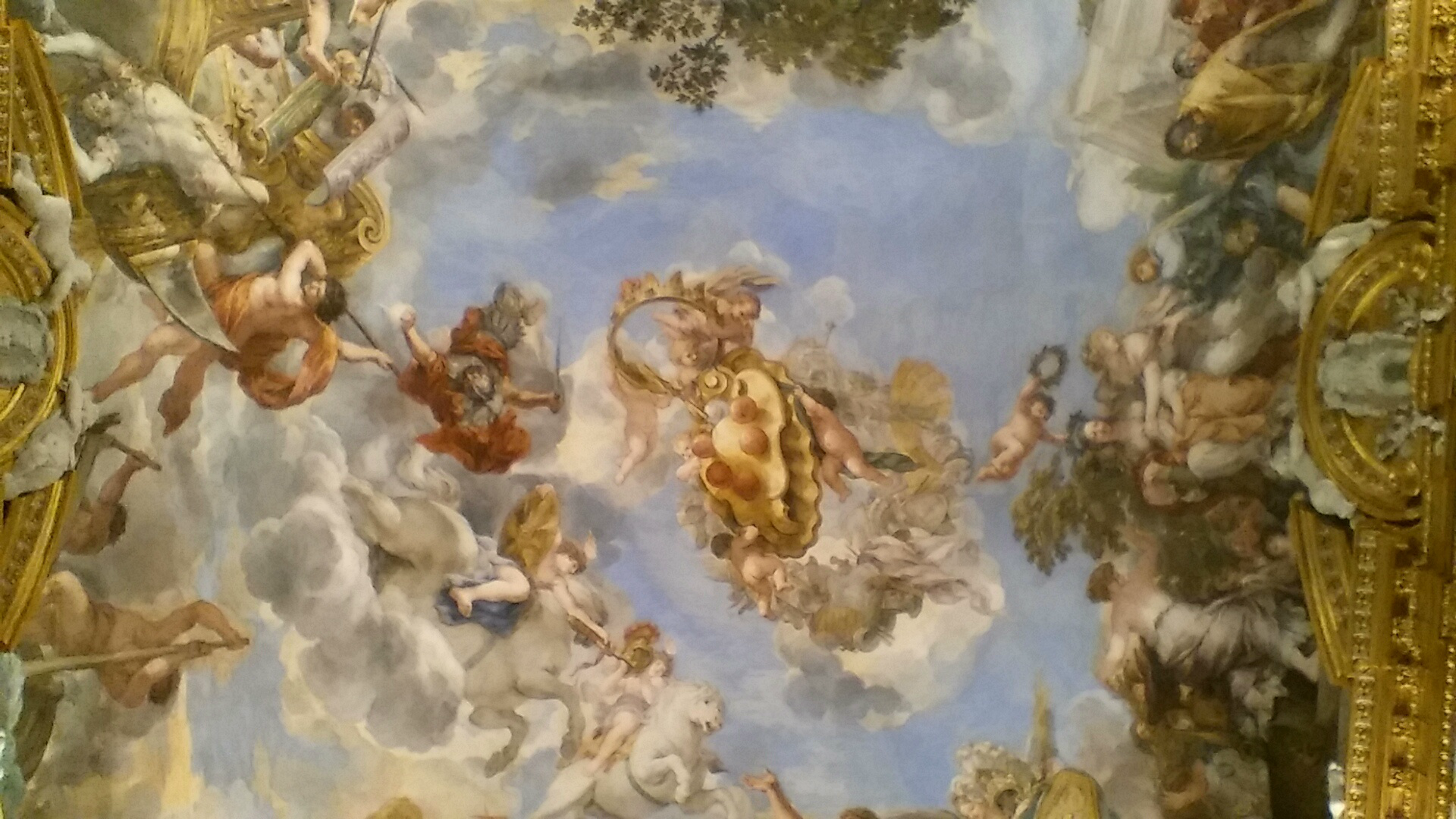
Pitti Palace Entrance Ticket & Digital Audio Guide
- Expert local guide
- Small group
- Skip-the-line access
Vasari Corridor To Pitti Palace Tour — Reserved Entry Above the Arno
Half a mile of Medici privacy, suspended over a working river.
Compare fares, pick the fit — all bookings are mobile-voucher and eligible for free cancellation where shown.
120 hr
Worth it for history buffs, skippable for budget travelers
The vasari corridor to pitti palace tour adds a supplement that brings your Uffizi ticket to 43 EUR day-of, and the honest question is what that buys. You get one-way access along Giorgio Vasari's elevated passage, the reopened self-portrait gallery, and those famous Ponte Vecchio windows framing the Arno above the goldsmith shops. What you do not get: a return loop to the main Uffizi galleries, since the walk deposits you near the Boboli side. That trade defines who this pays off for. Anyone drawn to Medici history, Renaissance architecture, or a rare skip-the-line corridoio experience will find the premium fair for a passage closed to the public for decades. Casual visitors juggling multiple Florence landmarks, or families on a tight budget, get thinner value from the added euros. Weigh the corridor's singularity against your itinerary before committing.
Bottom line: If Medici architecture and a rare corridoio walk excite you, the vasari corridor to pitti palace tour tickets justify the premium; otherwise, save the euros.
Hand-picked experiences loved by thousands of travelers
1 Day
Free Cancellation
Explore the Medici family's grand palace and stroll through the historic Boboli Gardens with an audio tour.
3 hours
Free Cancellation
Explore Renaissance masterpieces and stunning gardens with an expert guide at Florence's grand palace
110 minutes
Free Cancellation
Discover Renaissance masterpieces and royal apartments in Florence's magnificent former ducal residence
1.5 to 2 hours
Free Cancellation
Discover Renaissance masterpieces with an expert guide, then optionally walk the historic elevated passage
2 hours
Free Cancellation
Exclusive 2-hour journey through Renaissance masterpieces in a former royal residence
Enter the Uffizi two hours before the Vasari Corridor slot to view the main painting galleries first
Gather at the Venetian Chapel meeting point on the second floor before the guided group enters
Walk the elevated passage directly above the shops of Ponte Vecchio, viewing the Arno through small windows
Exit through the door beside the Buontalenti Grotto into the Boboli Gardens
Finish the vasari corridor to pitti palace tour in the courtyard of Pitti Palace, ready to continue into Palazzo Pitti
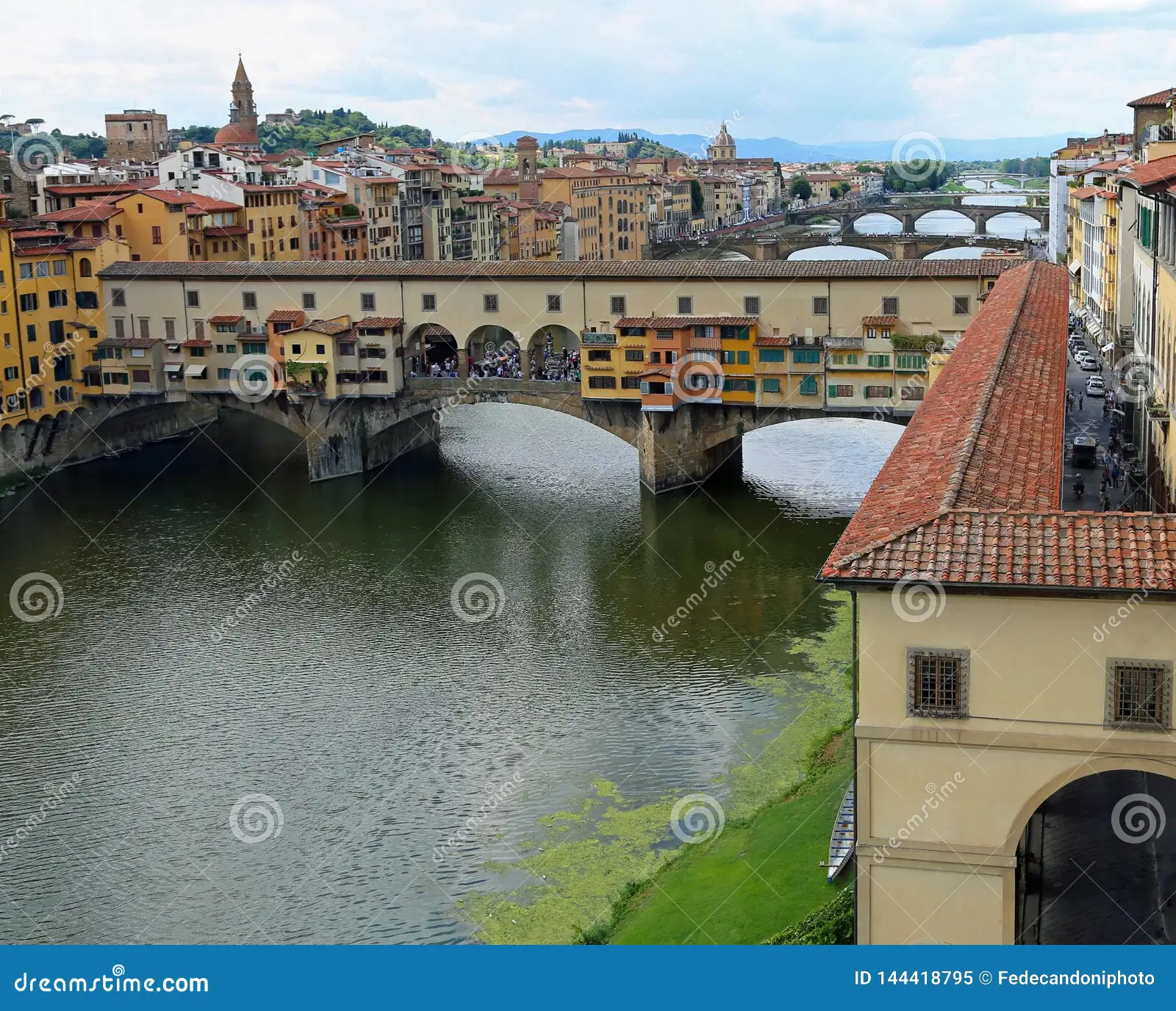
The Corridor runs directly above the shops of Ponte Vecchio through a row of small windows, letting visitors look down on Florence's oldest surviving bridge without crossing at street level. The route was built in just five months in 1565 under Cosimo I de' Medici's orders.
The Corridor's southern end emerges beside the Buontalenti Grotto, an artificial cave in the Boboli Gardens decorated with sculpted figures and rustic stalactite-like stonework. It marks the one-way route's final passage point before visitors reach Pitti Palace.
The Corridor's starting point inside the Uffizi is a small chapel-like room on the second floor, historically used for private Medici devotion before the family's covered walk to Pitti Palace. Groups of up to 25 visitors gather here ahead of each timed entry.
A stretch of the Corridor displays a collection of painters' self-portraits, a tradition dating back centuries and unique among Uffizi holdings for being viewable only from within this passage. The display spans works from multiple centuries of European painting.
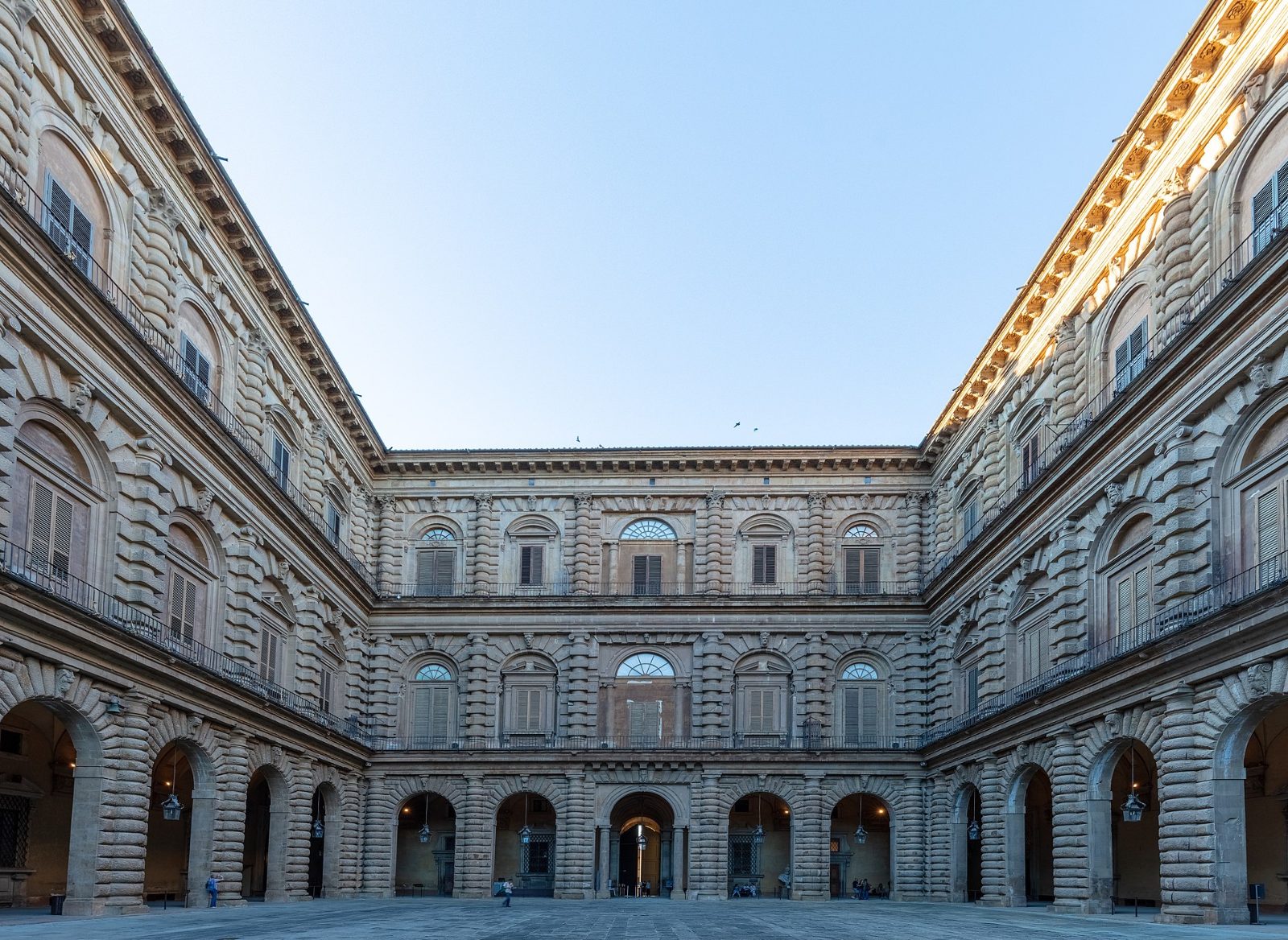
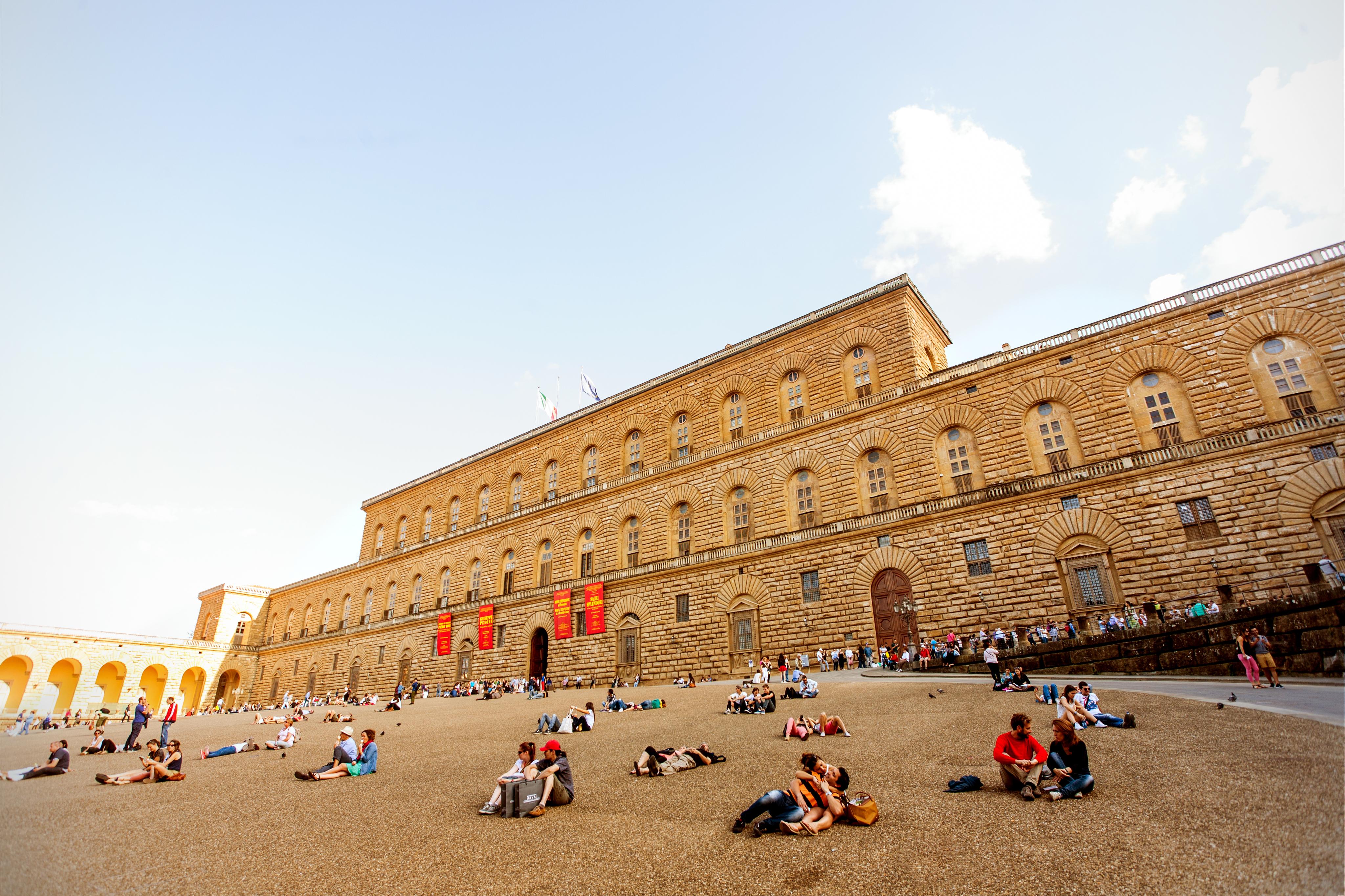
The tour concludes in the courtyard of Pitti Palace, the Medici's later grand-ducal residence, after exiting through the Boboli Gardens. The courtyard's rusticated stone facade contrasts with the Corridor's enclosed brick passage just traveled.
You enter at Piazzale degli Uffizi and clear security before 11:00, ideally on the 10:15 first slot, when the galleries run cooler and groups are smaller. A staircase lifts you off the museum floor and the noise drops away within twenty steps. The passage narrows. Ahead, a straight run of brick and light stretches further than you expect. You walk west above the Lungarno, then the floor levels out over the Ponte Vecchio. Here you stop at Napoleon's three windows and look downstream toward Ponte Santa Trinita, with jewellers' shutters directly beneath your feet and the river moving slowly in July heat. A vasari corridor to pitti palace tour usually pauses again at Santa Felicita, where a screened balcony opens onto the church interior — you look down into a nave you never entered. Past the church the corridor bends around the Mannelli tower, and the angle is sharp enough that you feel it in your shoulders. The last stretch climbs gently through the Boboli side and delivers you near the Grotta del Buontalenti, at Palazzo Pitti. You step outside into full sun. Behind you, the walkway you just crossed is invisible from the street — which was always the point. Vasari corridor to pitti palace tour tours end here, on the Oltrarno side, with the whole Medici geography reversed.
All the details about your upcoming adventure in one place
A vasari corridor to pitti palace tour follows Giorgio Vasari's elevated passageway of 1565, built for Cosimo I de' Medici to link the Uffizi with the Medici residence across the Arno. The route runs above the goldsmiths' shops of the Ponte Vecchio and past the Church of Santa Felicita before descending into the Boboli Gardens side of the palace. Most vasari corridor to pitti palace tour tickets are released in limited batches, since the corridor reopened after its long restoration and admits only small guided groups.
Giorgio Vasari built it in five months. The corridor that runs from the Uffizi to the Palazzo Pitti was commissioned by Cosimo I de' Medici in 1565 for the wedding of his son Francesco to Joanna of Austria, and the deadline was absolute. Roughly 750 metres of elevated passage went up over the Arno in less than half a year — a feat of speed that still governs how the structure reads today, all repetition and economy rather than ornament. The route matters more than the decoration. A vasari corridor to pitti palace tour follows the Medici family's private line of movement through a city they governed but did not entirely trust: out of the Uffizi's west wing, along the Lungarno, over the Ponte Vecchio on brackets that still carry the corridor's weight, past the Church of Santa Felicita where a private gallery let the family attend Mass without descending into the nave, then up through the Boboli slope into Pitti. Vasari was ordered to divert around the Mannelli tower when its owners refused to let it be pierced; the corridor bends sharply there, a visible record of a family that would not sell. The butchers were expelled in 1593. Ferdinando I moved goldsmiths onto the Ponte Vecchio in their place, objecting to the smell rising through the floor — which is why the bridge below sells gold today and why the corridor's small round windows look down onto jewellers rather than meat hooks. Napoleon's engineers later cut three large panoramic windows into the Ponte Vecchio section, and those remain the finest river views on the walk. After decades of closure and a long restoration, the passage reopened to the public with a redesigned interior: bare walls, new lighting, controlled climate, and roughly seventy-three works positioned along the route rather than the dense self-portrait hang of earlier years. The famous self-portrait collection now lives in the Uffizi proper. What remains is the architecture itself — brick vaults, iron brackets, the long shallow rhythm of windows — and a set of ancient Roman and early modern pieces chosen to punctuate rather than crowd. The corridor's damage is part of its record too. The 1993 Via dei Georgofili bombing tore open a stretch near the Uffizi end, and several paintings were destroyed. Restorers left evidence of that history legible rather than erasing it, which is one reason skip-the-line vasari corridor access is capped and timed: the fabric is fragile and the passage is narrow. Corridoio Vasariano tours therefore run in small, spaced groups, and vasari corridor to pitti palace tour tickets sell out well ahead of the visit date.
Vasari was given five months, a river, and a family that did not want to be seen walking.
There is no formal dress code for a vasari corridor to pitti palace tour, but comfortable closed-toe shoes are recommended since the roughly 750-metre passage includes stairs and uneven flooring. Light layers work well in summer, as the Corridor's small windows mean limited air circulation compared with the open Uffizi galleries.
All visitors pass through airport-style security screening at the Uffizi entrance before starting the Vasari Corridor tour, and bags larger than a small daypack must be left at the cloakroom since the one-way passage has no storage along the route. Because the Corridor cannot be re-entered from the Pitti Palace side, anything left behind cannot be retrieved until after exiting near the Boboli Gardens.
Photography without flash is permitted inside the Vasari Corridor's picture gallery sections, but tripods, monopods, and selfie sticks are not allowed given the narrow single-file walkway. Filming for commercial use requires separate written authorization from the Uffizi Galleries press office.
Children under six enter the Vasari Corridor free of charge, and reduced tickets apply to those under 18, but the one-way route with no rest stops and roughly 750 metres of walking suits older children better than infants in strollers. Prams are difficult to manage on the Corridor's stairs, so a front or back carrier is a more practical option for toddlers.
Wheelchair users should contact the Uffizi in advance, since sections of the Corridor above the Ponte Vecchio involve stairs and a narrow elevated walkway with limited turning space. An access ramp is available in Via della Ninna for the main Uffizi entrance, and staff can advise on lift use to reach the second-floor meeting point at Room D19.
Eating and drinking are not permitted inside the Vasari Corridor itself, and visitors should finish any snacks before the group is called at the Room D19 meeting point. Sealed water bottles are generally tolerated but must be kept out of sight near the artwork-lined walls.
Same closure as Uffizi Galleries
First group of the day at 10:15
Evening opening 19:00–23:00 seasonally
Busiest weekend day
Last group departs 16:35
Hours
Tue–Sun 10:15–16:35, closed Monday, first Vasari Corridor group enters at 10:15
Address
Corridoio Vasariano, Piazzale degli Uffizi, 50122 Firenze FI, Italy
Access
Ramp on Via della Ninna; lift to second floor by prior arrangement
Best window
10:15–12:00, first entry slot with smaller groups before midday
Bag policy
Small bags only, no large backpacks or suitcases inside the Corridor
Walk · 5-10 min · Free
The Uffizi entrance sits a short walk from Piazza della Signoria in Florence's pedestrian historic center, roughly 5-10 minutes from most old-town accommodations.
Public transport · 15-20 min · 1.70 EUR per bus ticket
ATAF city buses C1, C2, and C3 stop within a few minutes' walk of Piazzale degli Uffizi, and Santa Maria Novella train station is about a 15-20 minute walk away.
Taxi · 10-15 min · 10-15 EUR from Santa Maria Novella
Taxis can drop passengers at Piazza della Signoria or Lungarno della Zecca Vecchia, close to the Uffizi entrance, since the historic center has restricted vehicle access.
Car · 20-25 min walk from parking · 2-3 EUR per hour
Driving is discouraged since the Uffizi sits inside Florence's limited traffic zone (ZTL); the nearest public parking is Garage Il Parterre near Piazza della Libertà.
Tickets for the vasari corridor to pitti palace tour are nominative, personal and non-refundable once purchased, so the reservation cannot be cancelled or resold. The Uffizi ticket with Vasari Corridor supplement is priced at 43 EUR when bought on the day of the visit, and no changes to the booked time slot are permitted after purchase.
Recommended time
Half a day (4-5 hours total)
Because entry to the Uffizi is mandatory two hours before your booked Corridor slot, a 10:15 first-entry vasari corridor to pitti palace tour really starts at 8:15 with the main galleries, leaving the corridor walk itself to run about an hour along its frescoed, self-portrait-lined passage. Add 30-45 minutes if you continue on into Pitti Palace and the Boboli Gardens afterward, since the route is one-way with no re-entry to the Uffizi once the corridor begins. Budget extra buffer time getting from the second-floor galleries down to the Room D19 meeting point, and arrive five minutes early or risk losing your slot entirely.
Crowd levels through the day
Weather · crowds · average price — dots go green to amber to red as each metric rises.
March to May brings mild temperatures around 15-20°C and moderate crowds before summer peak season begins. Wisteria blooms in nearby Boboli Gardens during April, adding a seasonal draw to a vasari corridor to pitti palace tour.
June through August sees Florence's hottest weather, often exceeding 33°C, and the heaviest tourist volume of the year. The Friday evening openings from July 3 to November 20 offer a cooler alternative to daytime visits.
September to November brings cooling temperatures and thinner crowds after the August peak, making it a favored window for a quieter vasari corridor to pitti palace tour. The special Friday evening season continues through November 20.
December to February is the quietest period with temperatures near 5-10°C, though shorter daylight hours mean earlier closing at 16:35. Christmas week and New Year see brief closures on Dec 25 and Jan 1.
Reserve the 10:15 first-entry time for the vasari corridor to pitti palace tour since later slots fill first during summer, and this window avoids the largest midday tour groups.
Tickets grant Uffizi access two hours before the Corridor slot, so use that time to see the main galleries since the one-way Corridor route offers no return.
Leave large bags at your accommodation, since anything beyond a small daypack must be checked at the Uffizi cloakroom before security screening.
The roughly 750-metre passage includes stairs on both the Uffizi and Boboli Gardens ends, so avoid heels or sandals with poor grip.
From July 3 to November 20, 2026, the Corridor opens 19:00–23:00 on Fridays as a standalone evening ticket, separate from the daytime Uffizi-linked entry.
The tour finishes at the Buontalenti Grotto in Boboli Gardens, not back at the Uffizi, so arrange transport or your next stop near Pitti Palace in advance.
Phone +39 055 294883 in advance if traveling with a wheelchair or stroller, since the elevated walkway above Ponte Vecchio has limited turning space.
Uffizi Gallery, second floor, Piazzale degli Uffizi 6, Florence
Groups of up to 25 gather here before entering the Corridor
Get directionsBuontalenti Grotto, Boboli Gardens, Florence
Exit point at the end of the one-way Corridor route
Get directionsIn 1565 Cosimo I de' Medici commissioned Giorgio Vasari to raise an elevated passage linking the Palazzo Vecchio to the Palazzo Pitti. The occasion was dynastic: the marriage of Francesco I to Joanna of Austria. Vasari finished the work in roughly five months. The corridor ran nearly a kilometre above the city, crossing the Ponte Vecchio and threading past the church of Santa Felicita, where the Medici gained a private tribune. Any thoughtful vasari corridor to pitti palace tour begins with this fact of political anxiety made architectural, an aerial route that let the duke move between his seats of power unseen. The passage changed character over generations. In the 1580s Cosimo ordered the butchers of the Ponte Vecchio replaced by goldsmiths, sparing his walkway their odours. In 1681 Cardinal Leopoldo de' Medici's celebrated collection of artists' self-portraits began entering the Uffizi holdings, and the corridor later became the gallery where these self-portraits hung in long procession. A guided walk through these Florence landmarks still reads that lineage in the faces along its walls. War tested the structure. In August 1944 retreating German forces demolished every bridge across the Arno except the Ponte Vecchio, reportedly on Hitler's order, leaving the corridor's central span intact above the rubble. Later, the 1993 Via dei Georgofili bombing shattered windows and damaged works near its eastern end. Modern visitors on any Florence Vasari Corridor tour arrive after a long closure. In 2016 the passage shut for a major safety refurbishment, its self-portraits removed and its route reconceived. The reopening restored public access to one of the city's most guarded interiors. Reservations for a vasari corridor to pitti palace tour now route through the Uffizi, and skip-the-line Vasari Corridor entry has replaced the improvised access of earlier decades. Booking vasari corridor to pitti palace tour tickets grants passage along Vasari's original line. The best vasari corridor to pitti palace tour tours trace the whole arc, while a shorter vasari corridor to pitti palace tour tour still delivers the essential crossing above the Arno.
Cosimo I commissions Vasari's corridor, built in roughly five months for the Medici wedding.
Butchers on the Ponte Vecchio are replaced by goldsmiths to spare the ducal passage their smells.
Cardinal Leopoldo de' Medici's self-portrait collection enters the Uffizi holdings later shown in the corridor.
Retreating German forces spare the Ponte Vecchio while destroying every other Arno bridge.
The Via dei Georgofili bombing damages windows and works near the corridor's eastern end.
The corridor closes for a major safety refurbishment, its self-portraits removed.
Reopened access is booked through the Uffizi, restoring Vasari's original elevated route.
Wide arched windows enlarged in 1938 span the central section over the bridge, framing the Arno River, the goldsmiths' rooftops below, and a long sightline toward Ponte Santa Trinita. Stand centered in the corridor here for the classic river shot; the passage narrows so pause briefly rather than blocking the group.
Just past the bridge, on the left heading toward Pitti, a grille-covered opening looks down into the Church of Santa Felicita from the Medici's former private balcony. The shot is tight and dim, so it favors a phone camera or a fast lens over a tripod setup, and travelers researching a vasari corridor to pitti palace tour often list it as the moodiest stop on the route.
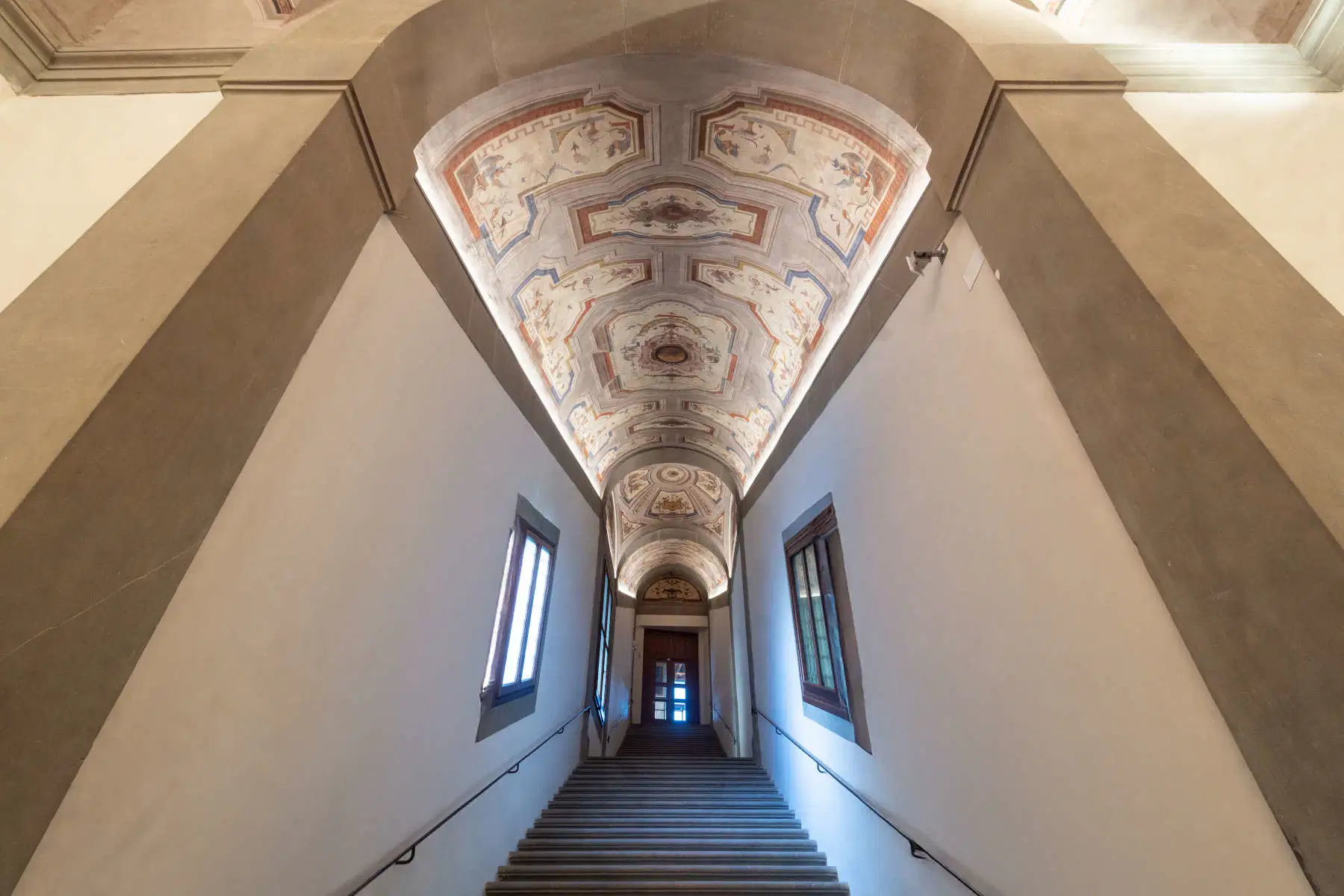
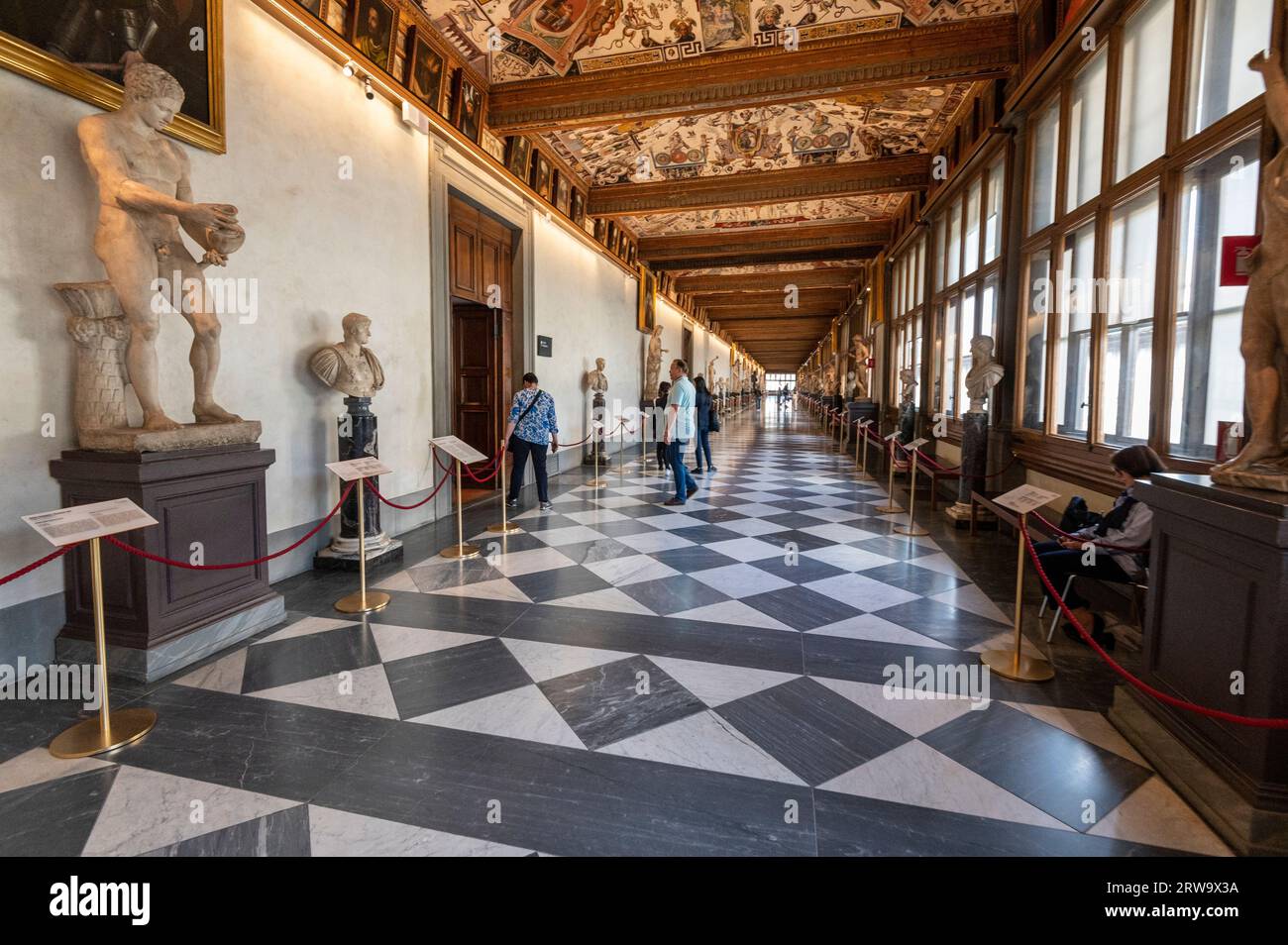
This section of corridor once lined with painted self-portraits still carries the proportions of a long picture gallery, with vaulted ceiling and evenly spaced window bays receding in a single perspective line. It suits a straight-down-the-hall composition capturing the rhythm of arches and light.
Near the Pitti Palace end, the walkway opens toward the Boboli Gardens and the Grotto of Buontalenti, giving a green, open-air contrast to the enclosed passage behind. It's a natural pause point for a final wide shot before descending into the gardens.
From outside, standing on the bridge itself, the small round-topped windows of the corridor are visible running above the jewelers' shopfronts, the classic exterior view confirming the passage overhead. This is a street-level shot, not part of the interior visit, best framed from the bridge's downstream side.
There is no dining inside the corridor itself, so plan meals for before or after your vasari corridor to pitti palace tour on either end of the walk. Near the Uffizi and Ponte Vecchio, grab a quick bite before setting off; near the Pitti Palace exit, the Oltrarno's trattorias and osterie make a natural stop once you emerge.
A short walk from Ponte Vecchio, this deli-restaurant pairs cured meats and cheese boards with a well-stocked wine list, good for a light bite before starting skip-the-line Vasari Corridor tickets.
Tucked into a medieval tower just off Ponte Vecchio, known for wild boar pasta and stew. Fills quickly at dinner, so it suits a pre-tour lunch better than a rushed stop.
A family-run Oltrarno trattoria on Via de' Serragli serving Tuscan staples like homemade pasta and bistecca. Casual and unhurried, a solid choice once you finish walking through to Palazzo Pitti.
Right on lively Piazza Santo Spirito, with outdoor tables for gnocchi and lasagna. Gets crowded at peak dinner hours but works well for an easygoing after-tour meal.
A polished trattoria on Via di Santo Spirito serving Tuscan classics like pappa al pomodoro and wild boar tortelli. Reservations are recommended, making it better suited to a planned dinner than a walk-in stop.
Real experiences from real travelers
Walking the vasari corridor to pitti palace tour meant crossing the Arno without ever touching the street, which still feels strange an hour later. The little windows over Ponte Vecchio are smaller than photos suggest and the glass is old and wavy. Our guide pointed out where the Medici would have looked down on the jewellers below.
We started in the east wing of the Uffizi and the noise just dropped away once the door closed behind us. The self-portrait collection along the walls goes on far longer than I expected, hundreds of faces at eye level. Coming out into the Boboli side of Palazzo Pitti in strong afternoon sun was a proper contrast.
The corridoio vasariano is narrow enough that you walk single file in places and the plaster still shows old repairs. Our small group had maybe twelve people so there was room to stop and look out over the river. Booking the vasari corridor to pitti palace tour tickets well ahead was necessary, everything was gone for the following two weeks.
It is a corridor, so if you come expecting grand rooms you will be surprised, but the sequence of spaces and the views make it worthwhile. There was a section near Santa Felicita where you look down into the church from the Medici balcony, which was the highlight for me. Bring water, the passage gets warm even in March.
Camminare sopra il Ponte Vecchio è un'esperienza diversa da qualsiasi cosa a Firenze. The July heat was heavy by eleven but the thick walls kept the passage bearable, and the Arno below was low and green. Ending at Pitti Palace with the Palatine Gallery ahead of us made the whole florence landmarks route feel connected.
Our guide explained the corridor was built so the family could move between the Palazzo Vecchio and their residence without mixing with the city, and you feel that intent in every blank stretch of wall. Winter light through the windows was pale and low, which suited the space. This skip-the-line vasari corridor route also saved us the queue at the Uffizi entrance.
Grey November morning, rain on the river, and the passage felt like a held breath above all of it. The stretch that curves around the Mannelli tower is oddly angular because the family refused to let it cut through their property, which our guide clearly enjoyed telling us. Several people in our group had tried for vasari corridor to pitti palace tour tours the previous season and been shut out.
Starting inside the gallery and finishing across the river is a satisfying line to draw through the city. September evening light came in sideways through the openings and lit the floor in strips. The florence vasari corridor tour also gave us context for the Boboli Gardens we walked afterwards.
Le couloir is not air conditioned and in late June it was noticeably close, though the guide had warned us. What surprised me was how much of it is windowless, then suddenly you are above the shops with the river on both sides. A solid vasari corridor to pitti palace tour tour for anyone interested in how the Medici actually moved through Florence.
The small grated opening above Santa Felicita, where the family could hear mass unseen, stopped our whole group in place. Late April and the corridor was cool and dim after the bright terrace of the Uffizi. Handled well from start to finish and the exit into Palazzo Pitti was seamless.
Everything you need to know for your journey
The vasari corridor to pitti palace tour runs Tuesday through Sunday from 10:15 to 16:35, with the first group entering at 10:15 and the last leaving at 16:35; it is closed on Mondays.
A vasari corridor to pitti palace tour ticket costs 43 EUR for the Uffizi ticket with Vasari Corridor supplement when purchased on the day of the visit.
Wheelchair access requires advance notice, since parts of the elevated walkway above Ponte Vecchio involve stairs and narrow turning space; call +39 055 294883 ahead of your visit.
Large backpacks, suitcases, tripods, selfie sticks, and food or drink are among the items not allowed inside the Corridor, and bags are screened at Uffizi security.
Non-flash photography is allowed along most of the route, but tripods, monopods, and selfie sticks are prohibited given the narrow single-file walkway.
Arriving for the 10:15–12:00 window offers the smallest groups and cooler galleries before midday crowds build, especially during the busy summer months.
There is no strict dress code, though comfortable closed-toe shoes are recommended for the stairs and uneven flooring along the roughly 750-metre passage.
Food and drink are not permitted inside the Corridor itself, so finish any snacks before assembling at the Room D19 meeting point.
The vasari corridor to pitti palace tour begins at the Room D19 meeting point on the Uffizi's second floor, reached via the main entrance at Piazzale degli Uffizi.
Children under six enter free and the tour suits older children well, though strollers are impractical due to stairs at both ends of the one-way route.
Tickets are nominative and non-refundable once purchased, so no cancellation or date change is possible after booking.
Ponte Vecchio, Palazzo Vecchio, Piazza della Signoria, and the Boboli Gardens all sit within a few minutes' walk and pair naturally with this Florence landmarks itinerary.
Florence's medieval stone bridge lined with goldsmith workshops, crossed overhead by the Vasari Corridor itself. It remains the only bridge over the Arno that survived World War II demolitions.
The fortress-like town hall of Florence, originally connected to the Vasari Corridor's northern end, with a tower offering panoramic city views.
An open-air sculpture gallery and civic square featuring a copy of Michelangelo's David and the Loggia dei Lanzi.
A formal Italian garden behind Pitti Palace where the Corridor's southern exit emerges near the Buontalenti Grotto.
A Gothic church near the Arno known for Ghirlandaio's frescoes in the Sassetti Chapel.
A quieter residential quarter across the Arno near Pitti Palace, known for artisan workshops and local trattorias.
Dense with hotels and guesthouses within walking distance of both the Uffizi and the Duomo.
Riverside properties along the Arno offering views toward Ponte Vecchio and the Corridor's arched windows.
Join thousands of happy travelers who have discovered this incredible experience
Book Your Experience Now